Phase 1 vs Phase 2 Environmental Site Assessment
If you are buying or financing commercial property, the terms Phase 1 and Phase 2 Environmental Site Assessment come up fast, and they are easy to confuse. They are two different steps in the same process. A Phase 1 is a paper-and-walkthrough investigation that looks for signs of possible contamination. A Phase 2 is the hands-on follow-up that drills, digs and lab-tests samples to confirm whether contamination is actually there. You only move to a Phase 2 if the Phase 1 turns up a reason to.
What a Phase 1 ESA is (and is not)
A Phase 1 Environmental Site Assessment is performed to the ASTM E1527-21 standard. It is a due-diligence investigation that answers one question: does this property have a history that suggests a release of hazardous substances or petroleum products may have occurred? To answer it, an environmental professional does four things:
- Records review. Historical sources such as aerial photographs, fire insurance maps, city directories and prior land use, plus federal, state and local regulatory databases.
- Site reconnaissance. A physical walkthrough of the property and a look at adjoining properties for staining, storage tanks, drums, odors and other visible indicators.
- Interviews. Conversations with current owners, occupants and, where relevant, local officials.
- Report. A written assessment that identifies any recognized environmental conditions and reaches conclusions about them.
A Phase 1 is non-intrusive. It does not include drilling, digging or collecting and testing samples of soil, water or building materials. That is the single most important thing to understand: a Phase 1 can flag a potential problem, but it cannot confirm or rule out actual contamination. Confirming it is the job of a Phase 2.
What a Phase 2 ESA is
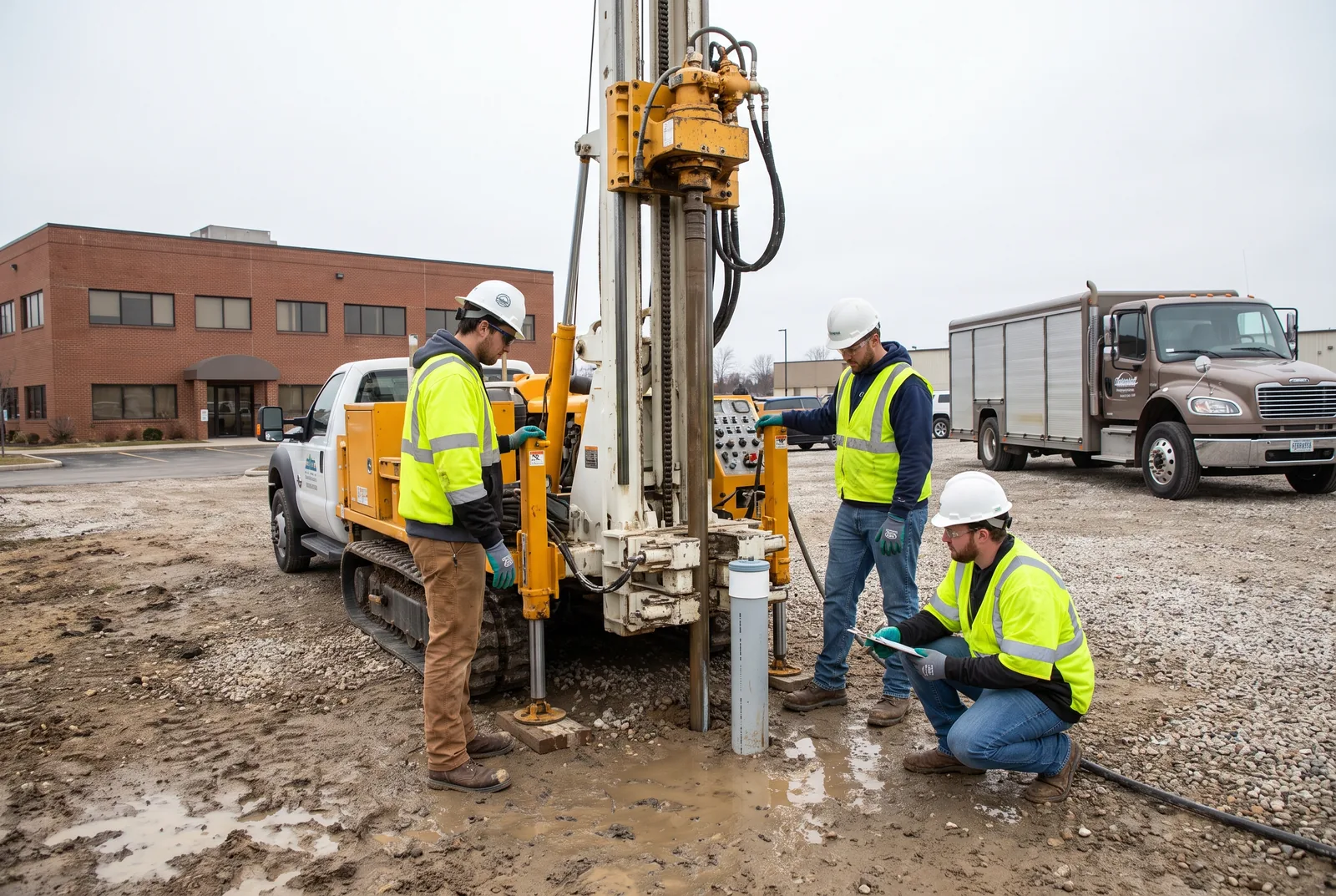
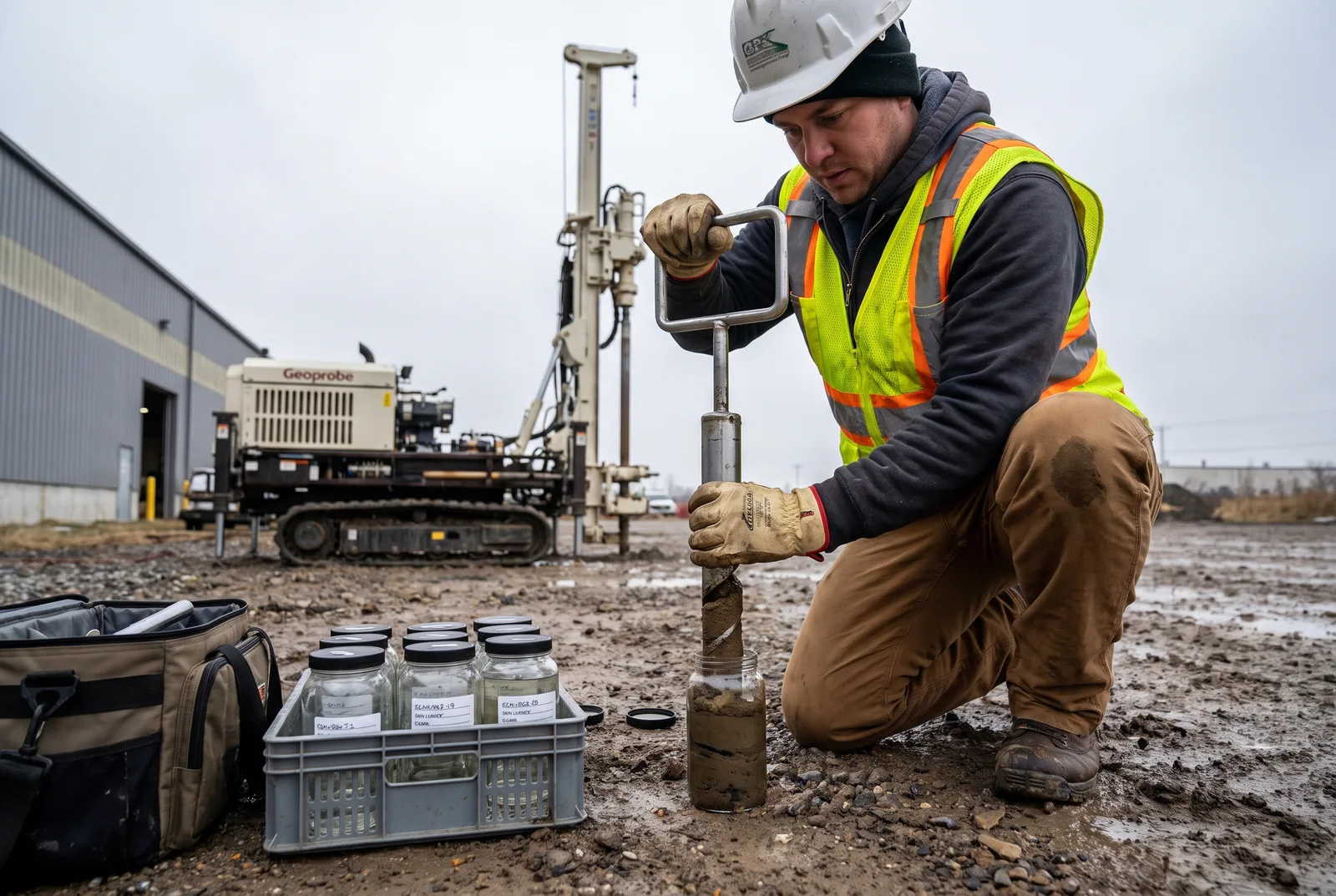
A Phase 2 Environmental Site Assessment is the intrusive investigation that begins where a Phase 1 leaves off. Its purpose is to verify the presence or absence of the contamination that the Phase 1 suspected, in the specific areas the Phase 1 flagged. Work is generally conducted under the ASTM E1903 standard practice for Phase II assessments. Typical activities include:
- Soil sampling, collected by hand auger or by drilling soil borings.
- Groundwater sampling, often through temporary or permanent monitoring wells.
- Soil vapor sampling and, in some cases, indoor or ambient air sampling.
- Building material sampling where relevant.
The collected samples are sent to an accredited laboratory for analysis, and the results are compared against applicable regulatory screening levels. One important point: unlike a Phase 1, ASTM E1903 does not prescribe a single required method. It is a flexible, risk-based framework, so the sampling plan is tailored to the specific RECs identified in the Phase 1 and to the conditions of the site.
Phase 1 vs Phase 2 at a glance
| Phase 1 ESA | Phase 2 ESA | |
|---|---|---|
| Intrusive? | No sampling | Yes, collects and tests samples |
| Standard | ASTM E1527-21 | Generally ASTM E1903 |
| What it includes | Records review, site walkthrough, interviews, written report | Soil, groundwater and soil-vapor sampling, lab analysis, findings report |
| What it produces | Identifies recognized environmental conditions (RECs) | Confirms whether contamination is actually present and at what levels |
| Trigger | Property purchase, financing or due diligence | A REC identified in the Phase 1 |
| Typical timeline | About 2 to 4 weeks | About 4 to 8 weeks (lab-dependent) |
| Typical cost (estimated) | $1,500 to $3,000 | $6,000 to $20,000+ |
What triggers a Phase 2: recognized environmental conditions
The main trigger for a Phase 2 is a recognized environmental condition identified in the Phase 1. In plain terms, a REC is evidence that a hazardous substance or petroleum product may have been released at the property, is present, or is likely to be present. Common examples include a former gas station or underground storage tanks, a current or past dry cleaner, prior industrial or manufacturing use, or regulatory records showing a reported spill on or near the site.
If the Phase 1 report lists one or more RECs, the logical next step is a Phase 2 to find out whether those conditions translate into actual contamination. Some lenders go further. Under U.S. Small Business Administration loan guidance, for example, certain high-risk property types such as dry cleaners can require a Phase 2 regardless of what the Phase 1 found. If a Phase 1 comes back clean with no RECs, a Phase 2 is usually not needed.
Who needs each, and when
In most commercial transactions the buyer orders the Phase 1 as part of due diligence, but lenders are the most consistent driver. A large majority of commercial lenders require a satisfactory Phase 1 before they will fund a loan, and SBA-backed loans have their own environmental due-diligence requirements. The reason goes beyond caution. Completing a proper Phase 1 to the ASTM E1527-21 standard is how a purchaser satisfies the federal All Appropriate Inquiries (AAI) rule, which in turn supports CERCLA liability protections such as the bona fide prospective purchaser, innocent landowner and contiguous property owner defenses.
A Phase 2 is needed by the same parties, but only when the Phase 1 points to a problem. For a buyer, it answers whether the deal still makes sense. For a lender, it answers whether the collateral is sound and whether the loan can proceed. Confirmed contamination can pause or stop financing until the risk is understood and addressed.
How long each takes
A standard Phase 1 ESA typically takes about two to four weeks from engagement to final report, and the pace is usually set by how quickly regulatory records come back. A Phase 2 takes longer because it involves field mobilization and laboratory work. A typical Phase 2 runs roughly four to eight weeks: time for utility clearance and permitting, a field sampling event, one to two weeks of lab analysis, and then report preparation. Complex sites or slow lab turnaround can extend that. If your closing date is tight, raise the timeline with your environmental firm at the start, and build in room for the possibility that a Phase 1 leads to a Phase 2.
What each costs (estimated)
Costs vary with property size, history, location and scope, so treat these as typical U.S. ranges rather than quotes. A Phase 1 ESA generally runs about $1,500 to $3,000, with simple sites lower and large or complex ones higher. A Phase 2 is a bigger engagement because of drilling, sampling and lab fees, and typically runs about $6,000 to $20,000, with complex or heavily contaminated sites running well above that. The biggest cost drivers on a Phase 2 are the number and type of samples, the depth and method of investigation, and the contaminants being tested for.
What happens after a Phase 2
A Phase 2 generally ends in one of three places:
- No contamination found. The samples come back clean and the report recommends no further action.
- Contamination below regulatory limits. Something is detected, but at levels below the applicable regulatory screening criteria, so the report may still conclude no further action is required.
- Contamination above regulatory limits. Levels exceed regulatory criteria, and further investigation or cleanup is needed.
In that last case, the project moves toward remediation, sometimes referred to as a Phase 3 ESA, which covers the actual cleanup, the treatment methods used, confirmation that contaminants were removed, and any ongoing monitoring. For a transaction, the Phase 2 results typically feed directly into the negotiation: price adjustments, escrow holdbacks, indemnities, or a decision to walk away. Either way, the Phase 2 converts the uncertainty a Phase 1 flagged into facts you can act on.
Frequently asked questions
What is the difference between a Phase 1 and Phase 2 environmental site assessment?
A Phase 1 ESA is a non-intrusive review of a property's records, site conditions and history, performed to ASTM E1527-21, that identifies recognized environmental conditions but collects no samples. A Phase 2 ESA is an intrusive investigation, generally following ASTM E1903, that collects and lab-tests soil, groundwater and soil vapor to confirm whether contamination is actually present.
What triggers a Phase 2 environmental site assessment?
The main trigger is a recognized environmental condition (REC) identified in the Phase 1 ESA. When the Phase 1 finds evidence that a release of hazardous substances or petroleum may have occurred, a Phase 2 is used to confirm whether contamination exists. Some lenders also require a Phase 2 for high-risk uses such as dry cleaners regardless of the Phase 1 findings.
Does a Phase 2 ESA always follow a Phase 1?
No. A Phase 2 is only needed when the Phase 1 identifies a recognized environmental condition or when a lender requires one for a high-risk property type. If the Phase 1 comes back clean with no RECs, a Phase 2 is usually not necessary.
How much does a Phase 2 environmental site assessment cost?
Costs vary widely with the number of samples, depth of investigation and contaminants involved. A Phase 2 ESA typically runs about $6,000 to $20,000, and complex or heavily contaminated sites can run well above that. By comparison, a Phase 1 ESA typically costs about $1,500 to $3,000.
What happens after a Phase 2 ESA?
A Phase 2 generally concludes in one of three ways: no contamination found, contamination below regulatory limits with no further action required, or contamination above regulatory limits that calls for further investigation or cleanup. If cleanup is needed, the project moves toward remediation, sometimes called a Phase 3 ESA.
Get a Phase 1 ESA quote in 24 hours
Match with a vetted environmental firm in your area and get a firm price.
Get a 24-hr quoteThis is general guidance. Every assessment should follow the applicable ASTM standard and be performed by a qualified environmental professional, and timelines and figures vary by property, scope and provider.