Environmental Due Diligence in Commercial Real Estate
Environmental due diligence is the part of a commercial real estate transaction where you find out what you are really buying before it becomes your problem. It is the structured investigation a buyer runs during the due diligence period to uncover contamination, regulatory liabilities and environmental risks that would otherwise transfer with the deed. Done well, it protects your capital, your financing and your legal standing. Done poorly or skipped, it can leave you holding a cleanup bill for a mess you never made.
What environmental due diligence covers
Environmental due diligence is not a single document. It is a set of steps scaled to the property and the deal. For a typical commercial transaction it includes some or all of the following:
- Phase 1 Environmental Site Assessment. The non-invasive records, reconnaissance and interview review performed to ASTM E1527-21 that identifies recognized environmental conditions.
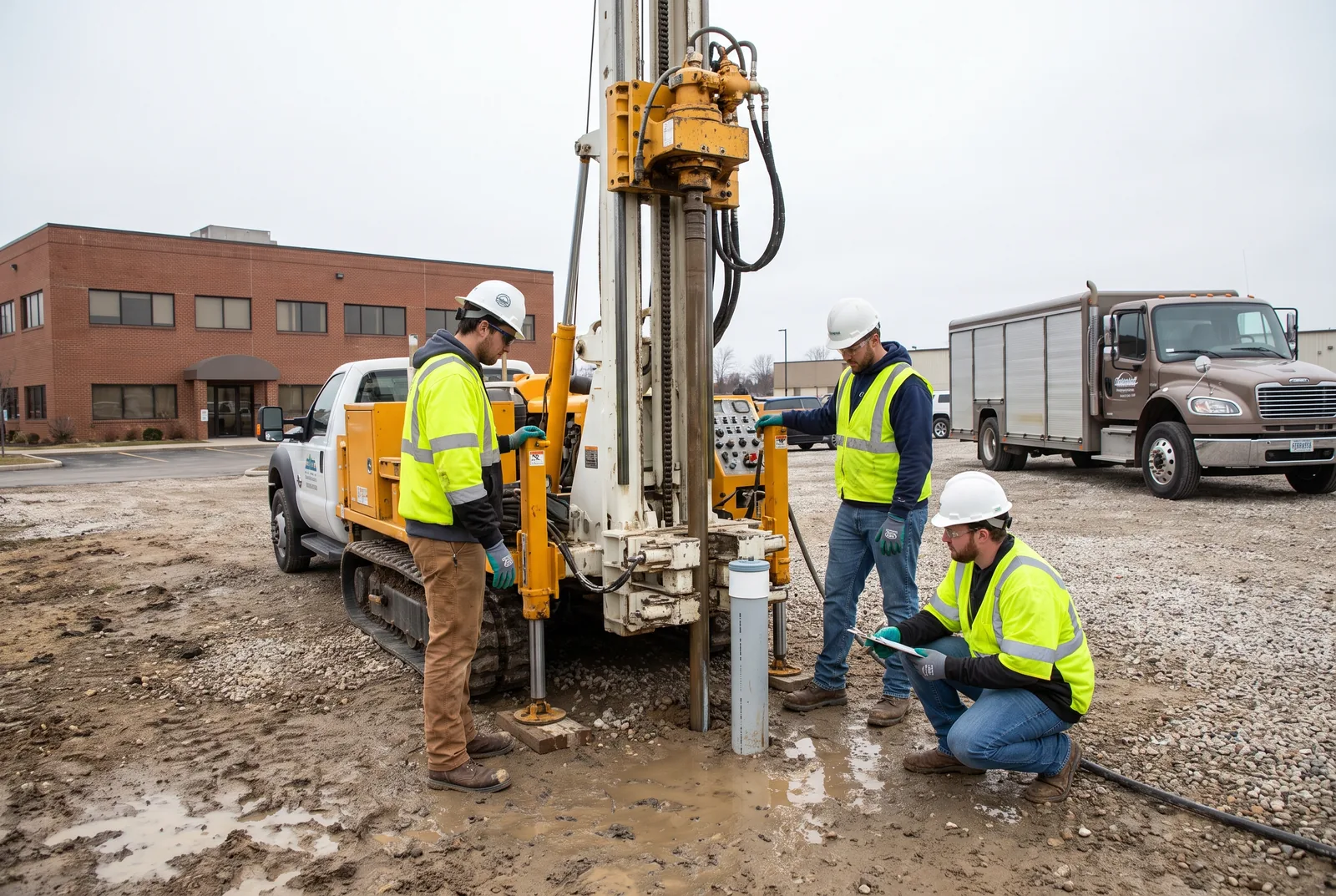
- Phase 2 Environmental Site Assessment. Invasive sampling of soil, groundwater or soil vapor, performed only when the Phase 1 flags a condition worth testing.
- Regulatory records review. Searches of federal, state and local databases for spills, permits, tanks and violations tied to the site and its neighbors.
- Environmental questionnaires. Forms completed by the seller or occupants, commonly required for SBA and some lender programs.
- Specialized surveys. Depending on the building, this can include asbestos, lead-based paint, radon or mold assessments, which fall outside the standard Phase 1 scope.
The Phase 1, then Phase 2 sequence
The process almost always starts with a Phase 1 ESA. It is the cost-effective first look: no drilling, no lab work, just a thorough review of the property's history and current condition by an environmental professional. If the Phase 1 comes back clean, that is often the end of the environmental investigation. If it identifies a recognized environmental condition, meaning evidence of a possible release of hazardous substances or petroleum, the recommended next step is a Phase 2 ESA.
A Phase 2 is a different animal. It involves physically sampling and testing soil, groundwater and sometimes vapor to confirm whether contamination is present and how serious it is. It costs considerably more and takes longer. Most deals never reach this stage, but when they do, the findings can reshape the price, the timeline or whether the deal happens at all. For the distinction in detail, see our comparison of the Phase 1 ESA and what it does and does not cover.
Why lenders insist on it
If you are financing a commercial purchase, environmental due diligence is not optional. Lenders require a Phase 1 ESA as a condition of funding because a contaminated property is poor collateral and because cleanup liability can wipe out a borrower's ability to repay. SBA-backed loans have their own layered environmental rules, which can require a questionnaire, a records search with risk assessment, or a full Phase 1 depending on the loan size and the property's use. If your deal involves an SBA loan, our guide to Phase 1 ESAs for SBA loans explains how those triggers work.
The liability protection behind it all
The legal engine driving environmental due diligence is CERCLA. Under it, the current owner of a contaminated site can be held responsible for cleanup regardless of who caused it. The way a buyer avoids inheriting that liability is by conducting All Appropriate Inquiries before closing, and a Phase 1 ESA to the ASTM E1527-21 standard is how that is done. Complete it properly and you preserve the innocent landowner and bona fide prospective purchaser defenses. Skip it and those defenses generally disappear, which is why even cash buyers who answer to no lender should still run proper due diligence.
Timing within the transaction
Environmental due diligence runs inside the broader due diligence period, which for commercial deals is often 30 to 45 days. Because a standard Phase 1 ESA takes two to four weeks, it should be ordered early so there is room to act on the findings or extend the period if a Phase 2 becomes necessary. Timing also matters after the report is done. Certain Phase 1 components are considered current for 180 days, and the report is generally treated as stale after one year. If your closing drifts past those windows, the report may need an update to keep your liability protection intact.
| Step | Typical timeline | Typical cost |
|---|---|---|
| Phase 1 ESA | 2 to 4 weeks | $1,500 – $3,000 |
| Phase 2 ESA (if triggered) | 4 to 8 weeks | $10,000 and up |
| Full due diligence period | 30 to 45 days | Varies by deal |
Common findings and how they are classified
A Phase 1 report does not just say "clean" or "dirty." The environmental professional classifies what they find using defined terms, and knowing them helps you read a report without panic. A recognized environmental condition, or REC, is the presence or likely presence of a hazardous substance or petroleum release on the property. A historical recognized environmental condition refers to a past release that has been addressed to the satisfaction of regulators, so it no longer poses a current concern under unrestricted use. A controlled recognized environmental condition is a past release that remains in place subject to controls, such as a deed restriction or an engineering barrier. Separately, the report may note de minimis conditions, which are minor issues that do not rise to the level of a REC. These distinctions matter because a historical or controlled condition tells a very different story than an active, unaddressed REC, and they drive very different decisions.
What due diligence does not cover
It is just as important to know the limits. A standard Phase 1 ESA does not test for asbestos, lead-based paint, radon, mold, lead in drinking water or indoor air quality. Those are considered non-scope issues under ASTM E1527-21, and a buyer who cares about them must commission separate surveys. The Phase 1 also does not sample soil or groundwater, which is reserved for a Phase 2. If your lender, your use case or your risk tolerance requires any of these, say so when you scope the engagement, so the environmental professional can bundle the right additional services rather than leaving a gap you discover after closing.
How to run it well
Good environmental due diligence comes down to three habits. Start early, so the timeline never forces you to close blind or waive a contingency you should not waive. Use a qualified environmental professional whose Phase 1 meets the full ASTM E1527-21 scope, because a thin report undermines the very liability protection you are paying for. And read the findings as decision tools, not formalities: a recognized environmental condition is not automatically a deal killer, but it is information you use to renegotiate, investigate further or walk away.
It also pays to coordinate the environmental track with the rest of your due diligence. The report should be addressed to the party relying on it, so confirm whether that is you, your lender or an entity you are forming before the work starts. Keep your lender in the loop on timing, since they will want to see and rely on the final report. And keep the budget in perspective: a Phase 1 ESA is one of the least expensive investigations in a commercial deal relative to what it protects against. For a sense of the numbers, see our Phase 1 ESA cost guide or estimate your own with the cost calculator. Treated this way, environmental due diligence is one of the highest-return steps in any commercial real estate transaction.
Frequently asked questions
What is environmental due diligence in commercial real estate?
It is the structured investigation a buyer runs before closing to uncover contamination and environmental liabilities tied to a property. Its core is the Phase 1 ESA, which can lead to a Phase 2 ESA, along with regulatory records, questionnaires and specialized surveys.
Is environmental due diligence required?
It is not a universal legal mandate, but lenders require a Phase 1 ESA to finance commercial property, SBA loans have their own environmental rules, and CERCLA liability protections depend on performing All Appropriate Inquiries before you buy. In practice it is standard in nearly every commercial deal.
What is the difference between a Phase 1 and Phase 2 ESA?
A Phase 1 ESA is a non-invasive records and site review with no sampling. A Phase 2 ESA is performed only if the Phase 1 identifies a recognized environmental condition, and it involves collecting and testing soil, groundwater or vapor to confirm whether contamination exists.
How long does environmental due diligence take?
A standard Phase 1 ESA takes two to four weeks, and the broader commercial due diligence period is often 30 to 45 days. If a Phase 2 ESA is triggered, it can add another four to eight weeks, so ordering early is important.
How long is a Phase 1 ESA valid for a transaction?
Certain Phase 1 components are considered current for 180 days, and the report is generally treated as stale after one year. If closing slips past those windows, the report may need an update to preserve CERCLA liability protection.
Get a Phase 1 ESA quote in 24 hours
Match with a vetted environmental firm in your area and get a firm price and timeline.
Get a 24-hr quoteFigures are typical U.S. ranges for general guidance and vary by property, scope and provider. A Phase 1 ESA should follow ASTM E1527-21 and be performed by a qualified environmental professional.